
Ultrasonic sensing accurately identifies various materials such as particles and powders, including empty and full materials
Ultrasonic sensing accurately identifies various materials such as particles and powders, including empty and full materials
With the continuous advancement of technology and the continuous development of the industrial field, ultrasonic sensors will demonstrate their potential in more fields, bringing more convenience and value to enterprises.
In the rapidly changing materials industry, the integrated feeding machine is the core equipment of the production line, and its stable operation and efficient management directly affect the production efficiency and product quality of the enterprise. However, how to accurately detect the empty and full status of materials (particles or powders) in a sealed storage bin is not only related to the continuity and stability of the production line, but also directly affects the production efficiency and cost control of the enterprise.
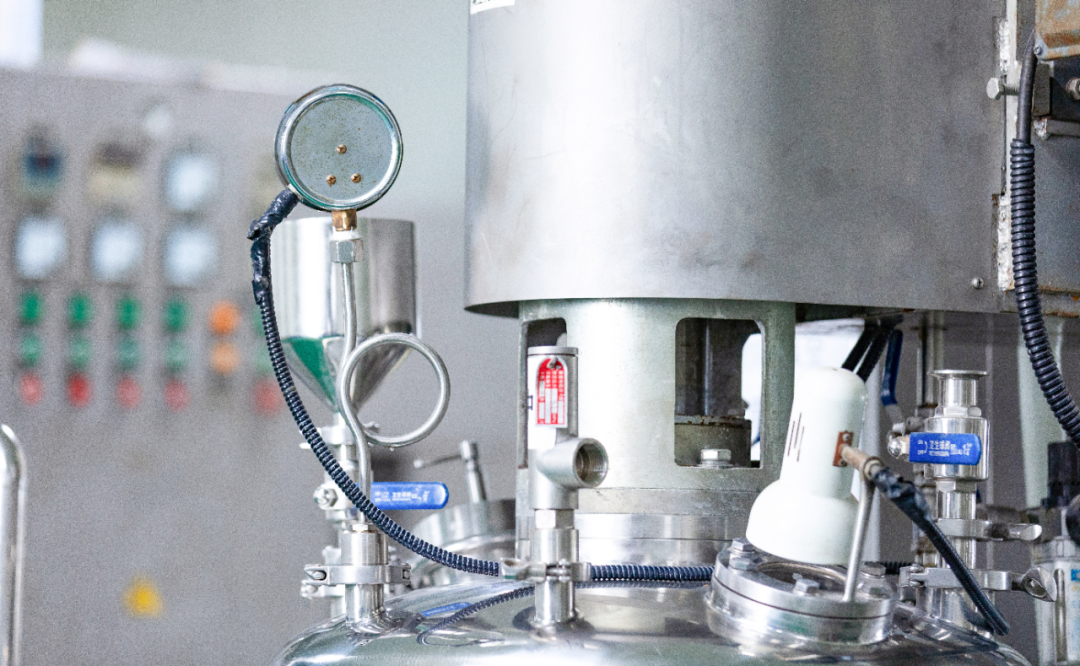
In this issue, Xiaoming will showcase a reliable solution - ultrasonic sensors, which will help you solve the problem of material detection.
Application scenario
Ensuring the correct inventory of materials in sealed barrels is crucial for maintaining the continuity and stability of the production line.
The integrated feeding machine is a common automation equipment in the materials industry, used to transport materials from storage devices to processing equipment. During this process, sensors are required to detect the material inside the sealed barrel.
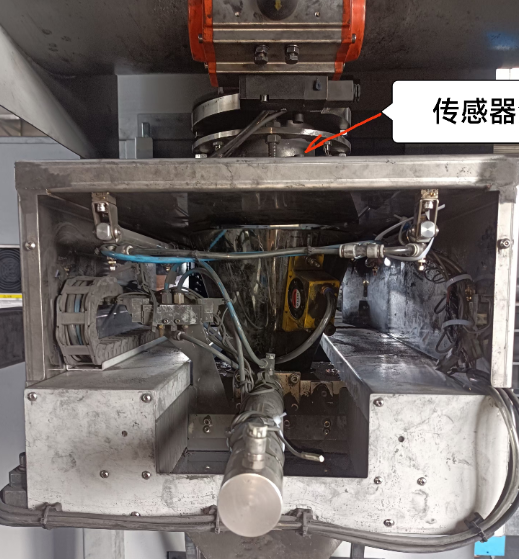
The material is in granular or powder form, and the sensor needs to have corresponding analog output when the material is empty or full.
⭐ Sensor selection:
Choose Meiji's short ultrasonic sensor MS18-90V with analog output function, which has switch/analog output, fast response time, and can output continuous signals related to material height
⭐ Installation location:
Install the ultrasonic sensor above the sealed barrel, ensuring that the emitting surface of the sensor is at a certain distance from the surface of the material, in order to accurately measure the height of the material. At the same time, attention should be paid to avoiding interference from bucket walls or other objects on the sensor.
⭐ Calibration and Debugging:
After installation, it is necessary to calibrate and debug the sensor to ensure its measurement accuracy. This usually includes steps such as adjusting the sensitivity of the sensor and setting the measurement range.
⭐ Signal processing:
The analog signal output by ultrasonic sensors can be received and processed through PLC (Programmable Logic Controller) or other data acquisition devices. These devices can convert analog signals into digital signals and perform further calculations and judgments to achieve the detection of empty and full materials.
⭐ Alarm and Control:
When the material reaches an empty or full state, the PLC or other control system can trigger corresponding alarm signals and take corresponding control measures, such as stopping feeding, starting material preparation, etc., to ensure the normal operation of the production line.
Implementation effect
1. High precision measurement: Meiji's ultrasonic sensor has a repeatability of 2% and can accurately measure the height of materials, achieving precise detection of empty and full materials.
2. Non contact measurement: Ultrasonic sensors use non-contact measurement methods, which will not cause pollution or damage to materials, and will not be affected by material characteristics.
3. Strong adaptability: Ultrasonic sensors are suitable for detecting various forms of materials (particles/powders/blocks, etc.), and can maintain stable measurement performance no matter how the color of the material changes.
4. Easy to install and maintain: Ultrasonic sensors have the characteristics of small size, light weight, easy installation, and relatively low maintenance costs.
Faced with the challenge of material inspection in the material industry, ultrasonic sensors have become a wise choice to solve this problem due to their excellent performance and wide application prospects.
With the continuous advancement of technology and the continuous development of the industrial field, ultrasonic sensors will demonstrate their potential in more fields, bringing more convenience and value to enterprises. We look forward to ultrasonic sensors playing a greater role in industrial automation and intelligence processes, creating more benefits for enterprises.
+86 18188641602

Akusense Technology Co., Ltd.