
Is vegetable packaging also high-tech? Fiber optic sensor solves the sealing problem of thin stem chives
Is vegetable packaging also high-tech? Fiber optic sensor solves the sealing problem of thin stem chives
The innovative application of sensors in vegetable bagging machines and how they meet the complex and diverse packaging needs of vegetables.In daily life, we often see various types of vegetable packaging in markets or supermarkets. These packaging should not only be aesthetically pleasing, but more importantly, protect the freshness of vegetables and prevent damage during transportation and storage.
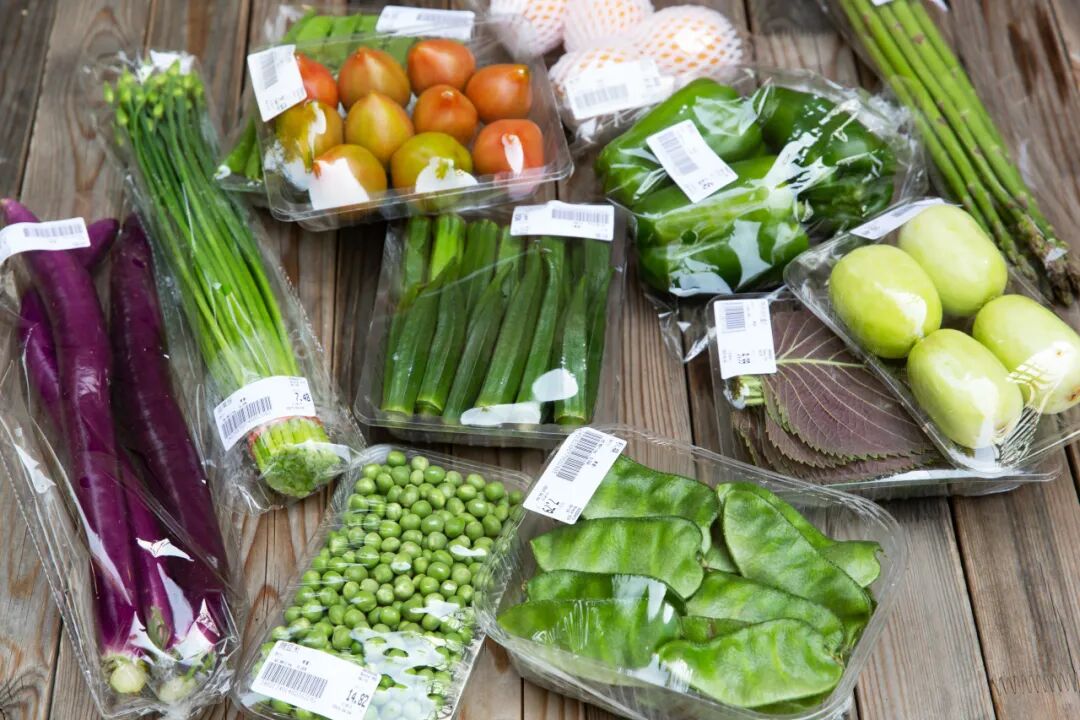
As an expert in industrial sensors, in this issue, Xiao Ming will share the innovative application of Akusense sensors in vegetable bagging machines and how they meet the complex and diverse packaging needs of vegetables.
Application scenario
On the vegetable bagging machine, sensors can be installed to locate the sealing process and send signals to drive the equipment to perform the sealing action
Testing difficulties:
For vegetables with different shapes, especially those with small and fragile tails, such as scallions and chives, traditional packaging methods often struggle to achieve precise positioning and effective protection.
Premature sealing may cause the vegetable tail to be squeezed, deformed, or broken, while sealing too late may result in packaging waste and unnecessary material costs.
solution
To solve the above problems, Meiji recommends using fiber optic sensors. Fiber optic sensors have demonstrated unique advantages in the field of vegetable packaging due to their high precision, high sensitivity, and non-contact measurement methods.
1. Accurately identify the tail of vegetables:
Fiber optic sensors can accurately measure the length, diameter, and tail position of vegetables by emitting light of specific wavelengths and receiving light signals reflected or scattered from the surface of vegetables. This feature enables the bagging machine to accurately determine the tail of vegetables, thereby avoiding damage caused by premature sealing.
2. Adapt to different types of vegetables:
Due to the wide variety and diverse forms of vegetables, traditional mechanical sensors are often difficult to adapt to. Fiber optic sensors can intelligently recognize and classify different vegetables based on their spectral characteristics, ensuring that the bagging machine can achieve precise bagging for different types of vegetables.
3. Non contact measurement:
The non-contact measurement method of fiber optic sensors avoids direct contact with vegetables, thereby reducing the risk of damage to vegetables during packaging. At the same time, this measurement method also improves the operational efficiency and stability of the bagging machine.
Specific implementation
On vegetable bagging machines, fiber optic sensors typically work in conjunction with mechanical arms, film feeding mechanisms, heat sealing mechanisms, and other components to achieve precise bagging and independent small packaging of vegetables. The specific process is as follows:
1. Vegetable positioning and identification:
After the vegetables are placed on the conveyor belt, the fiber optic sensor first locates and identifies them. By collecting spectral signals from the surface of vegetables, sensors can accurately determine the type, length, and tail position of vegetables.
2. Film delivery and bagging:
According to the size and shape of the vegetables, the film feeding mechanism sends a suitable size of film above the vegetables.
3. Heating indentation cutting:
After the bagging process is completed, the heat sealing mechanism heats and compresses the film to form a sealed packaging. At the same time, in order to avoid damage caused by premature sealing of the bag. Here, fiber optic sensors will monitor the position of the vegetable tail in real time, ensuring that cutting can only be carried out after the tail has fully entered the packaging. The cutting process usually uses instant heating with electric heating wire to achieve smooth and fast film cutting.

The application of fiber optic sensors in vegetable bagging machines not only improves the accuracy and efficiency of packaging, but also reduces the risk of damage to vegetables during the packaging process.
By accurately identifying the tail of vegetables, adapting to different types of vegetables, and utilizing non-contact measurement, fiber optic sensors ensure the safety and efficiency of vegetables during the packaging process.
+86 18188641602

Akusense Technology Co., Ltd.