
50 nanometer precision! Spectral confocal sensors in the real battlefield of the 3C industry
50 nanometer precision! Spectral confocal sensors in the real battlefield of the 3C industry
As a leader in domestic spectral confocal technology, Akusense Sensing's ADK and ACC series sensors are becoming the "ultimate weapons" in the quality inspection process of the 3C industry with a 50 nanometer repeatability and multi material adaptability.
3C manufacturing is moving towards the era of "nanometer level precision", and consumers' ultimate pursuit of screen display effect and device thinning forces the manufacturing process to achieve 0.1 micron level quality control.
As a leader in domestic spectral confocal technology, Meiji Sensing's ADK series and ACC series are becoming the "ultimate weapons" in the quality inspection process of the 3C industry with 50 nanometer repeatability and multi material adaptability.
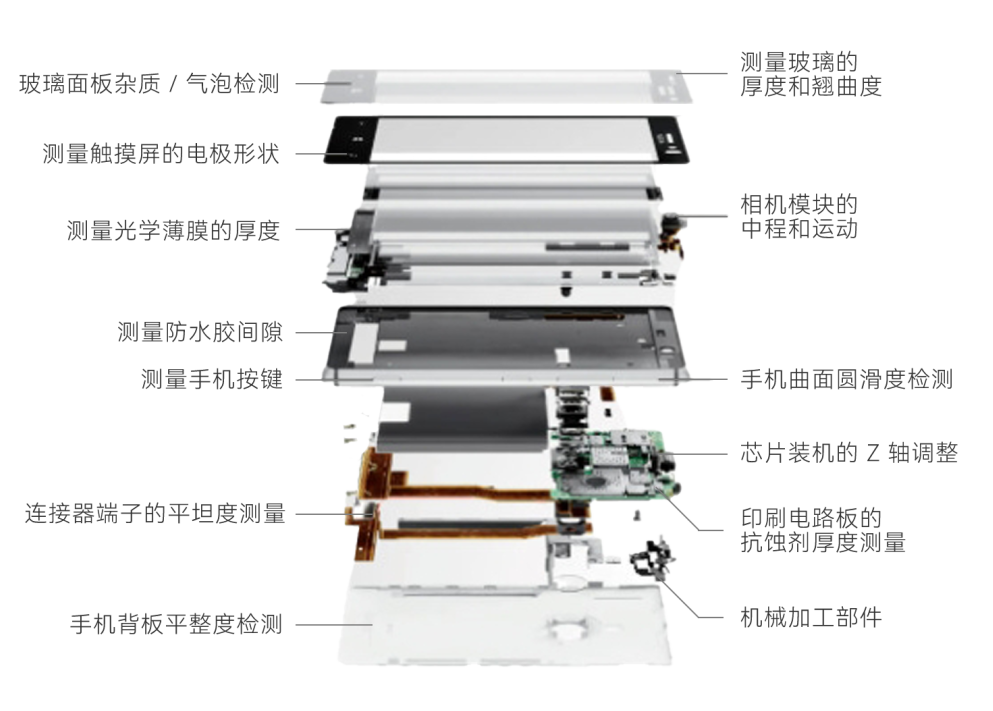
In this issue, Xiao Ming will share classic application cases of Meiji Spectral Confocal in the 3C industry

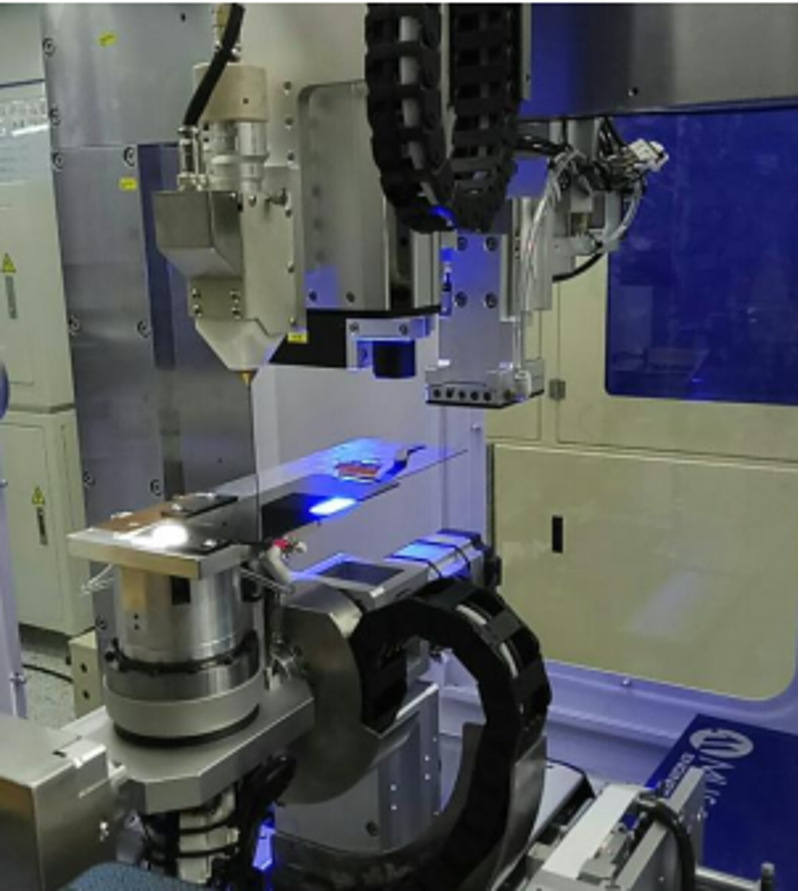
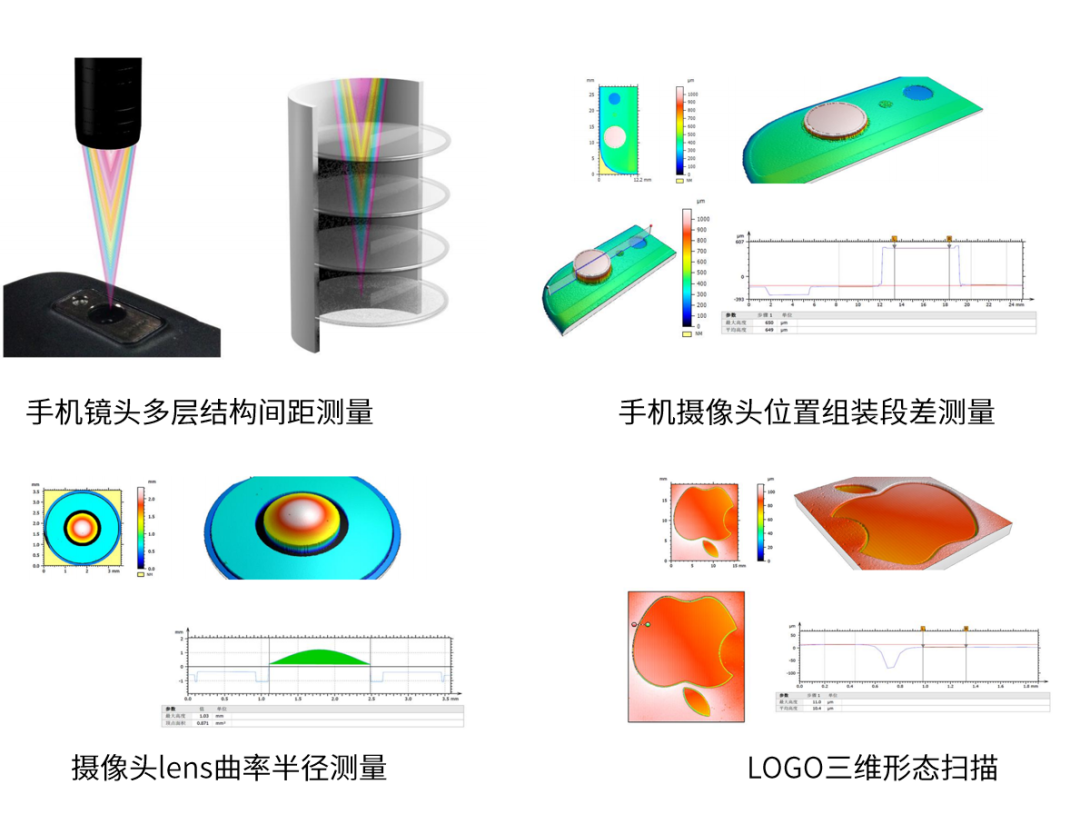
Measurement of adhesive thickness for mobile phone cameras
In the manufacturing process of mobile phones, the adhesive process of the camera module is a key step to ensure the fixation and sealing of the camera. The precise control of adhesive thickness is crucial for the performance and structural stability of the camera.
Traditional measuring tools have limitations when measuring transparent adhesives, such as contact measurement that may contaminate the adhesive, and monochromatic laser sensors that may experience issues with light penetration or reflection angles when measuring curved adhesives.
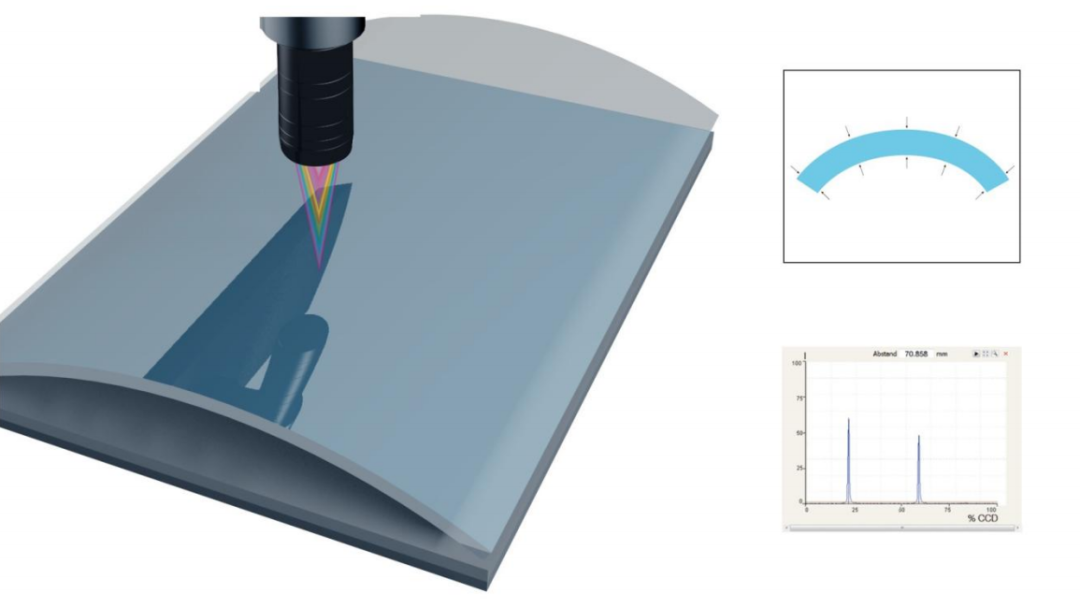
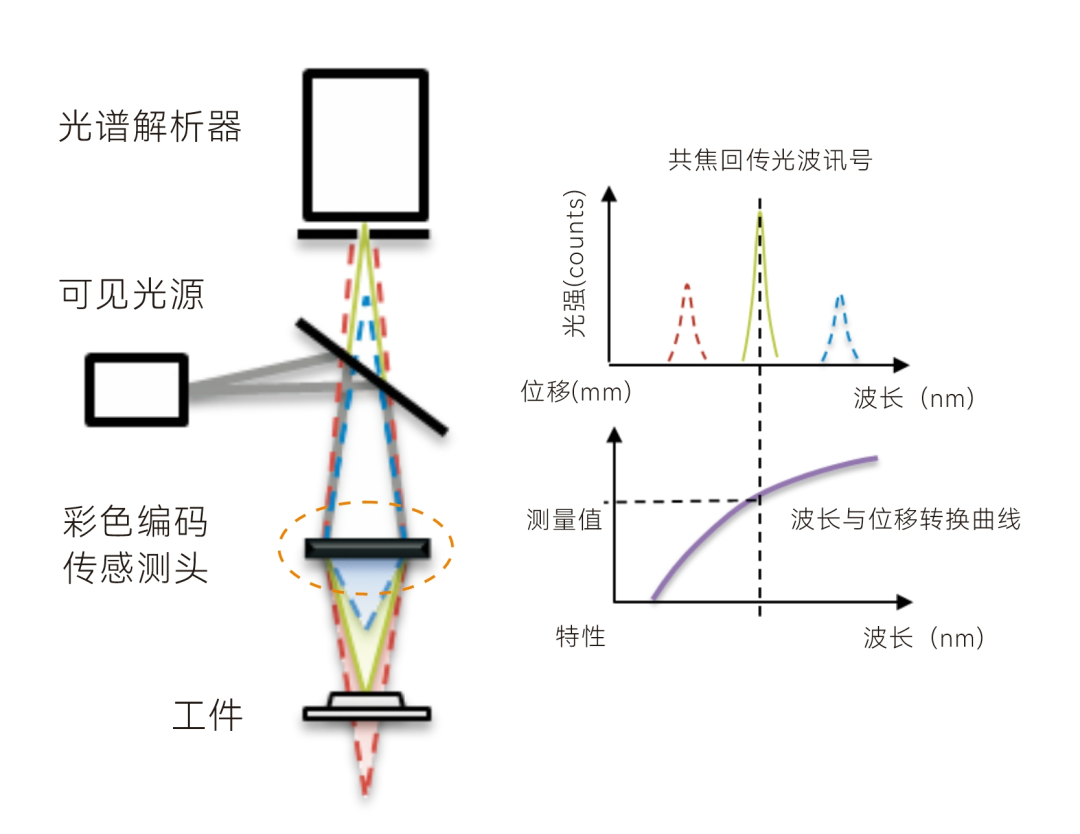
Spectral confocal sensors emit a beam of broad-spectrum light (white light), which forms monochromatic light of different wavelengths after passing through a dispersive lens. These monochromatic lights illuminate the surface of the glue, and only the light that meets the confocal condition can be sensed by the spectrometer through the small hole.
By calculating the wavelength of the sensed light, the distance from the sensor to the surface of the adhesive can be accurately converted, thereby achieving the measurement of adhesive thickness.
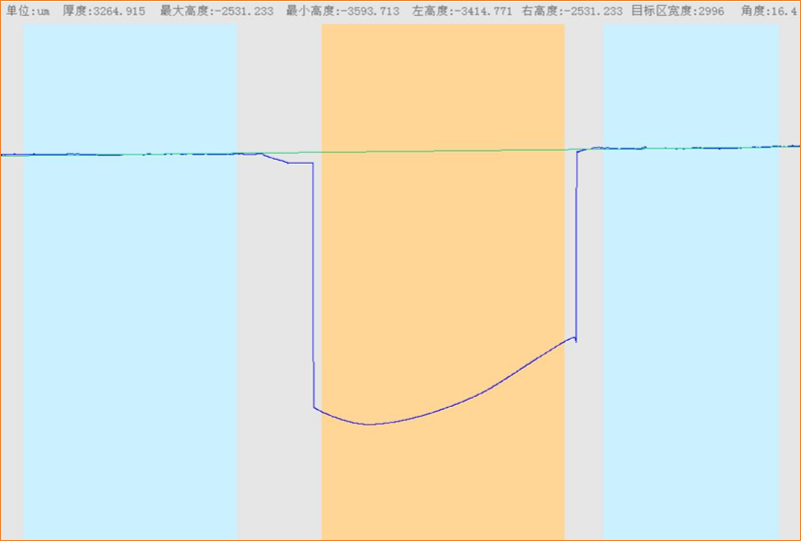
测量波形图

Measurement of Ink Thickness on Mobile Screen
In the field of mobile phone manufacturing, ink coating is one of the key processes that requires multiple precise coatings, ensuring the flatness and consistency of the coating thickness each time. The thickness of a single coating should be controlled at the micrometer level (typical value 50-200 μ m), and the flatness error of each layer should be ≤ ± 5 μ m.
Traditional contact measurement poses a risk of scratching, while ordinary optical sensors have low light energy utilization (<30%) and significant temperature drift (>0.1% F.S./° C), making it difficult to meet the requirements of high-speed online full inspection.

Spectral confocal sensor with high precision and non-contact measurement: sub micron level accuracy, avoiding the risk of scratches in contact measurement, suitable for ultra-thin coating detection

Measurement of the curvature of the screen cover surface
In the field of mobile phone manufacturing, ink coating is one of the key processes that requires several precise coatings, ensuring the flatness and consistency of the coating thickness each time. The thickness of a single coating should be controlled at the micrometer level (typical value 50-200 μ m), and the flatness error of each layer should be ≤ ± 5 μ m.

Adopting probes with large measurement angles and high-precision ACC10 spectral confocal sensors to adapt to the complex surface structure of curved cover plates.

还有更多案例...
Technical Principles
The Meiji Spectral Confocal Sensor decomposes broad-spectrum white light into beams of different wavelengths through a dispersive lens, and uses the correspondence between wavelength and focal length to achieve non-contact displacement measurement.
Core Advantages
Material universality: can stably measure materials such as metals, ceramics, mirrors, glass, etc
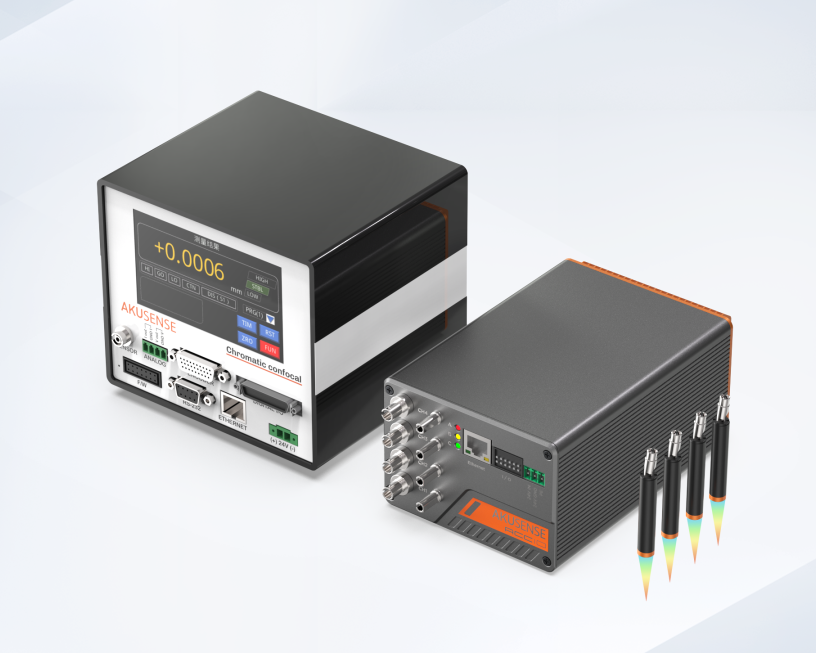
Precision breakthrough: ADK series resolution reaches 0.02 μ m, ACC10 series repeatability accuracy is 50nm
Dynamic performance: up to 40kHz sampling rate, suitable for high-speed production lines
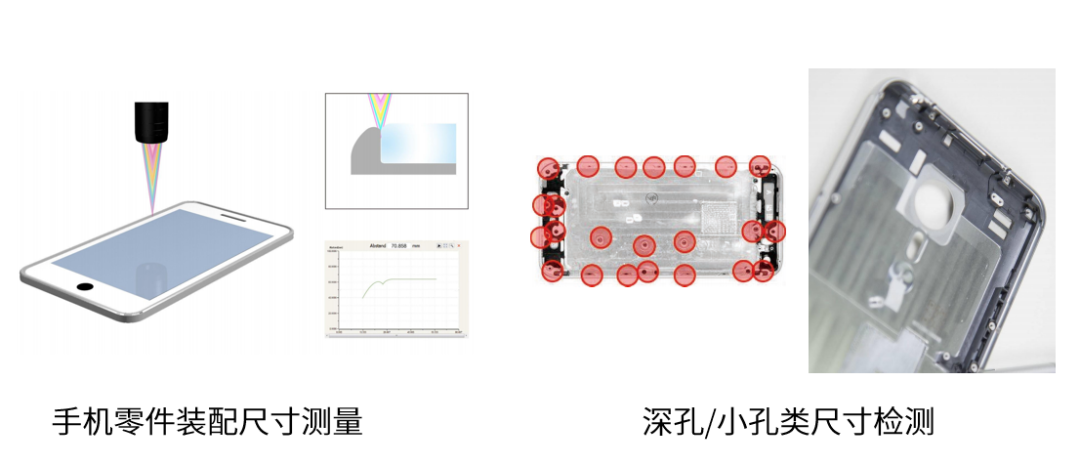
Complex surface adaptability: supports ± 60 ° tilt angle measurement, solves problems such as curved surfaces and deep holes
点击下载更多产品资料↑

+86 18188641602

Akusense Technology Co., Ltd.