
Reflection light interference detection? The color code sensor uses a "slanting" technique to solve the problem easily!
Reflection light interference detection? The color code sensor uses a "slanting" technique to solve the problem easily!
How to efficiently solve the problem of reflected light interference in the detection of PCB blue adhesive film, choose Akusense ESE series color code sensor
In the electronic manufacturing industry, the quality control of PCB (printed circuit board) is directly related to the stability and reliability of end products.
In the PCB production process, the film coating anti failure detection in the front stage of the board splitting machine process is a seemingly simple but prone to errors - if the uncoated PCB is not detected in a timely manner, serious quality problems such as short circuits and corrosion may occur in subsequent processes due to missing film.
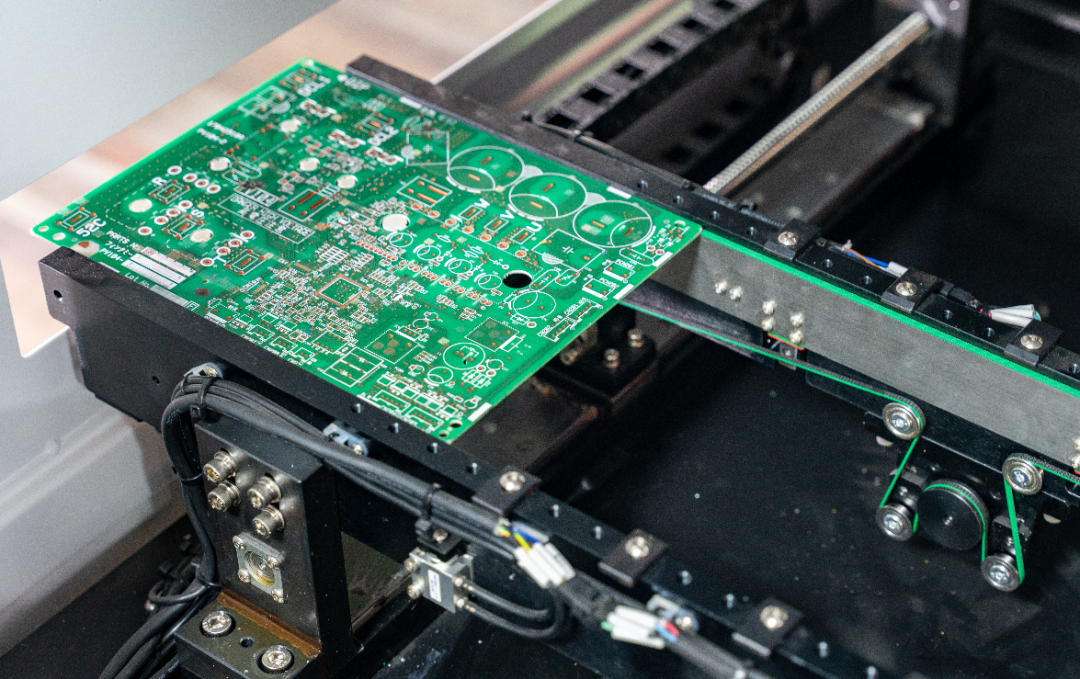
In this issue, Xiaoming will share how Akusense sensors efficiently solve the problem of reflected light interference in the detection of PCB blue adhesive film, achieving stable, accurate, and high-speed non-destructive testing!
Scenario requirements and challenges
In the PCB splitting process, to protect the circuit from moisture, dust, or mechanical damage, a layer of blue glue protective coating (such as three proof paint, protective glue, etc.) needs to be applied on the surface. This layer of adhesive film will exhibit blue reflective characteristics under specific lighting conditions, and the task of the sensor is to:
Quickly determine whether the PCB has been properly coated to prevent uncoated boards from flowing into the next stage

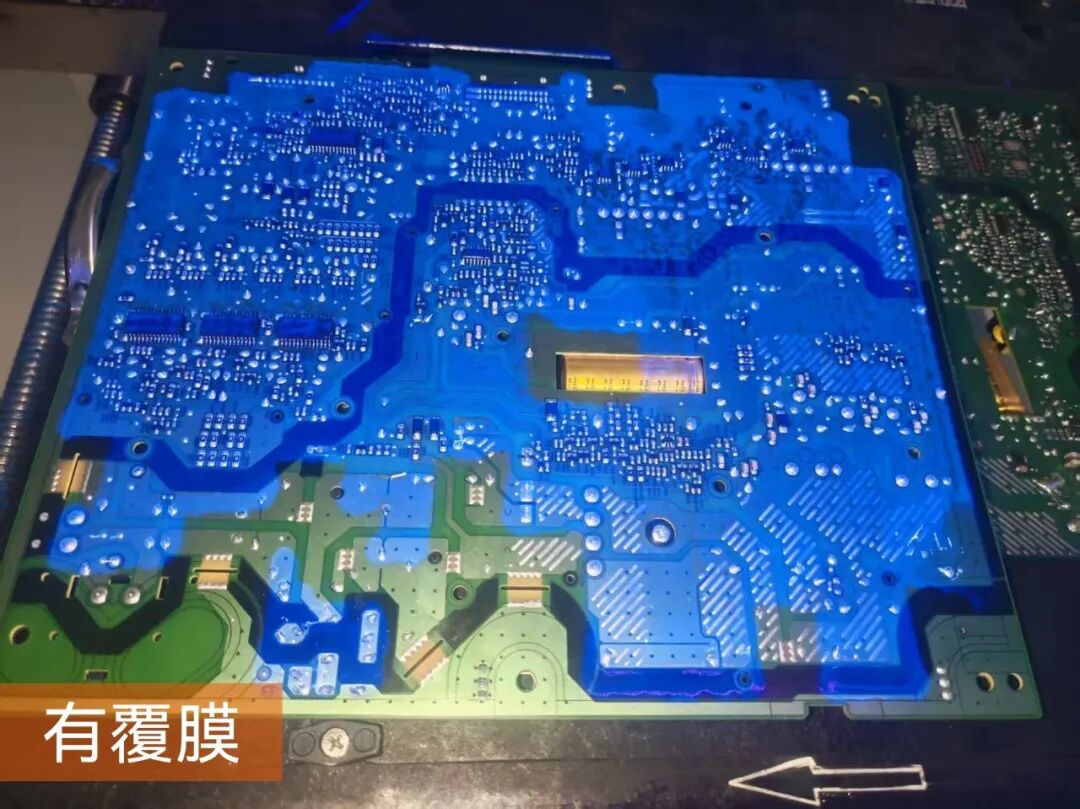
Testing difficulties:
1. Mirror reflection interference: Reflected light causes trouble, and traditional solutions frequently misjudge. The surface of PCB is mostly made of metal or composite materials, which will produce strong reflected light after lighting, mixed with the blue signal of the adhesive film, causing the sensor to misjudge whether there is a film or not.
2. Low color discrimination: Some PCB substrates have darker colors (such as black and dark green), with minimal color difference from the blue adhesive film, making it difficult for traditional color sensors to accurately identify.
3. High speed detection requirements: The belt line can run at a speed of up to 1m/s, and the sensor needs to complete the detection within milliseconds, otherwise it is easy to miss detection.
solution
In the face of the above challenges, we recommend a well-known electronics manufacturer to choose Meiji's ESE series color sensor and adopt the "tilted installation+RGB three color detection" solution
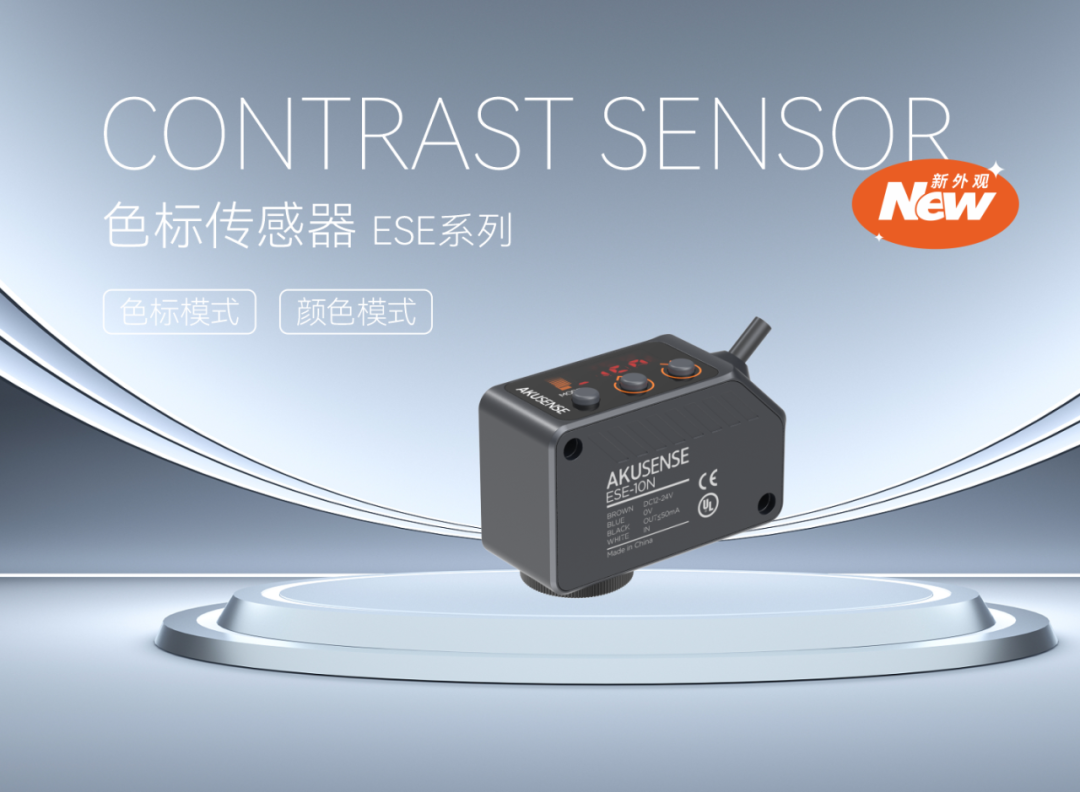
The core highlights of the product are as follows:
1. RGB tri color light source: Simultaneously generate red, green, and blue channel signals, analyze color differences through algorithms, and accurately distinguish between blue adhesive film and PCB substrate.
2. Polarization filtering technology: Equipped with a built-in polarizer, it filters specular reflection light and only captures the diffuse reflection signal of the adhesive film, improving detection stability by 80%!
3. High speed response: detection cycle ≤ 10ms, easily matching belt line speed of 1m/s.
Small design on installation:
Tilt at 45 °, reflected light 'takes a detour'
When installing sensors vertically, the sensor receiving end is prone to directly receiving strong reflected light from the PCB surface (as shown in the left figure);
After being installed at a 45 ° angle (as shown in the right figure), the reflected light path deviates from the sensor receiving end, and only the diffuse reflection signal of the adhesive film is captured, significantly optimizing the signal-to-noise ratio (SNR).
In industrial testing, "details determine success or failure". The Meiji ESE color code sensor successfully solves the "big problem" of reflected light interference through a small design of inclined installation, providing engineers with high-precision, high stability, and low-cost testing solutions.
If you also face similar testing difficulties, please feel free to communicate with us at any time
We will provide you with customized solutions to help your production line move towards intelligent upgrading
+86 18188641602

Akusense Technology Co., Ltd.