
Complete tens of thousands of counts in just one second~
Complete tens of thousands of counts in just one second~
With the rapid development of the 3C electronics industry, the demand for chips is increasing day by day. How to quickly and efficiently detect the product quality of chips has become a top priority for production enterprises.
What are chip pins?
Pin, also known as pin, is an English term for a pin. It is the connection between the internal circuit of the integrated circuit (chip) and the peripheral circuit, and all the pins constitute the interface of this chip. A section at the end of the lead is soldered together with the solder pads on the printed board to form a solder joint.
With the rapid development of the 3C electronics industry, the demand for chips is increasing day by day. How to quickly and efficiently detect the product quality of chips has become a top priority for production enterprises.
Traditional manual detection methods have drawbacks such as low production efficiency and high misjudgment rates. Therefore, it cannot meet the demand for large-scale production and manufacturing of chips, so machine automation detection methods have gradually replaced traditional manual detection.
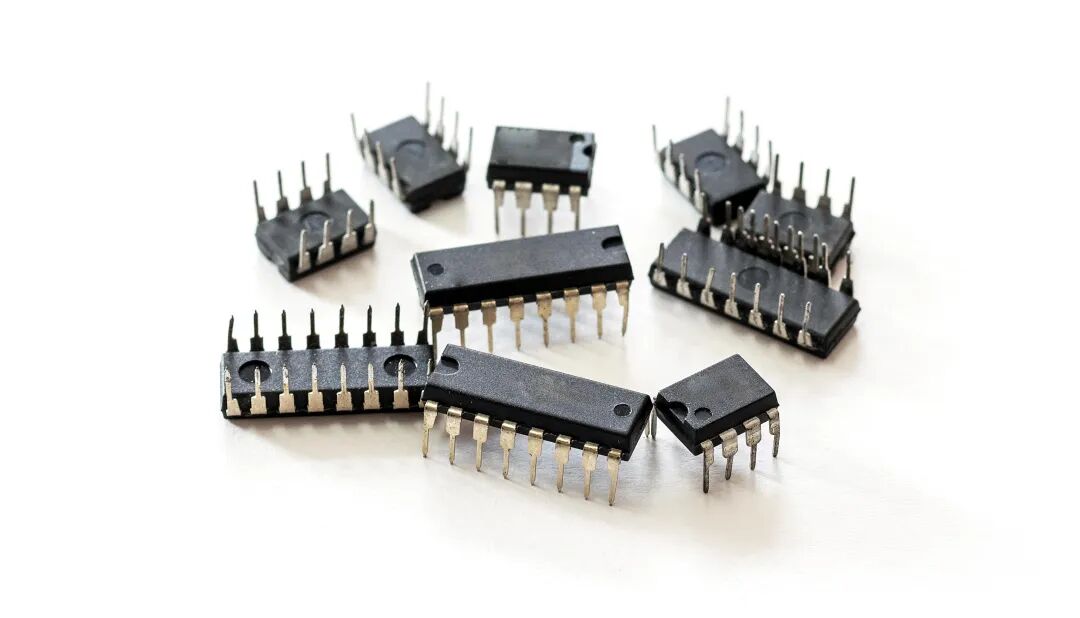
Akusense Sensor has developed an application design scheme for chip pin counting stations, and its detection system has effectively determined the number of defects in chip pins; During the rapid transmission of chips, the number of chip pins can be detected, triggering mechanical removal of chips with unqualified pin numbers.
Project Difficulties
1. Characteristics of chip pins (small pin width, large number of pins)
2. Fast device movement speed and small pin spacing
2. Require fast and non-contact measurement process, as well as high stability and accuracy of measurement results
3. Chips come in various specifications and types, including single row and double row structures
4. The pin material is metal, and the scattered light generated between them will have a certain impact on the detection of the sensor
Inspection Plan

1. The PG1 amplifier has a fast response speed of up to micrometer level, which can meet the application scenarios of high-speed material movement
2. Paired with PF-2D focusing lens, it can avoid the impact of reflection from the rear needle pins on the counting results. The focused light spot diameter can be focused to below 1mm and accurately positioned on the pins, achieving accurate and stable detection
+86 18188641602

Akusense Technology Co., Ltd.