
Accelerate upgrade! Assist in the flexible adjustment of drug production capacity
Accelerate upgrade! Assist in the flexible adjustment of drug production capacity
Let's share some applications of sensors in drug production~In drug packaging, it is necessary to accurately count pills, capsules, gel caps and other products to ensure that each bottle contains an appropriate amount of tablets

Production enterprises have insufficient production capacity to meet the sudden surge in market demand; The plan for each link is insufficient, and the workers are positive for COVID-19 successively, which also affects the output of the pharmaceutical factory to a certain extent; The production capacity is difficult to adjust freely and cannot quickly adapt to the rapidly changing market.
Recently, 'shortage of medicine' has become a common phenomenon. Everyone watched as their relatives, friends, and colleagues around them either tested positive or experienced symptoms such as fever, headache, sore throat, and overall pain.
The demand for drugs has surged, employees have disappeared one after another, and the logistics system is almost paralyzed ..
In the face of the just experienced 'herd disaster', I believe everyone has a profound understanding. The increasing uncertainty brought by manual production makes the implementation of automated production and logistics crucial.
In this issue, Xiaoming will share with you some applications of sensors in drug production~
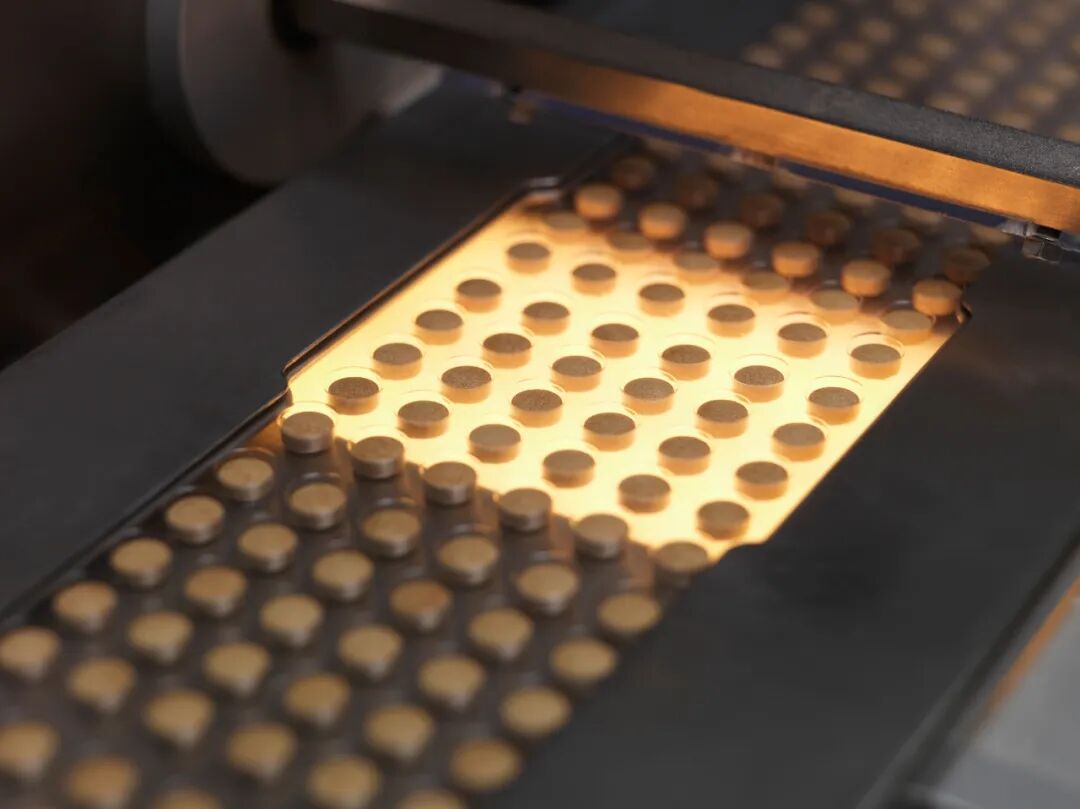
In the drug packaging, it is necessary to accurately count the tablets, capsules, gel caps and other products to ensure that each bottle contains an appropriate amount of tablets. To ensure that the tablets are separated from each other and do not fall into the bottle side by side or at the same time, a sensor suitable for high-speed counting of small objects needs to be selected to ensure the accuracy of counting.
Solution - Fiber Optic Sensor
① Using the PT-32 series of optical fiber components with spot aggregation, even very small pills can be stably detected;
② Paired with Meiji fiber amplifier PC1, the response time reaches 16us and can detect tens of thousands of times per second, meeting the requirement of counting items with extremely fast response speed.
Need to read the QR code on the medicine bottle, there are multiple code systems that need to be recognized; And the packaging material has reflectivity, which brings inconvenience to the image recognition of the code reader.
Drug traceability code is a code used to uniquely identify the sales packaging units of drugs at all levels, consisting of a series of numbers, letters, and/or symbols. The standardized identification of drug traceability codes is an important factor in ensuring the correct transmission of drug traceability information. Strengthening the standardization and guidance of drug traceability code identification is of great significance for promoting the construction of drug traceability system and implementing drug traceability system.
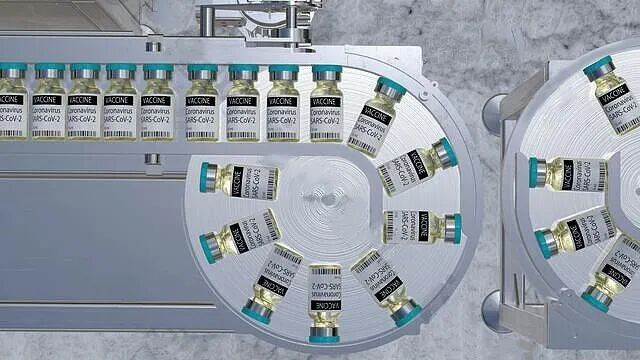
Solution - Intelligent Code Reader
① Adopting Meiji intelligent code reader, equipped with advanced liquid focusing technology, combined with advanced deep learning technology and focusing algorithm, achieving single millisecond zoom speed;
② Support reading multiple code systems;
③ Support barcode reading with different coding processes (such as hollow dot matrix code, hole matrix code, arc DPM code, striker DPM code, dot matrix code, etc.);
④ Equipped with an automatic polarized light source, it can effectively eliminate reflections and bright spots;
⑤ It has the advantages of fast, accurate, and clear focusing.
Inspect various types of tablet packaging on the production line to identify defects such as missing or incorrect packaging
点击图片获取更多资料
Solution - Visual Sensor
① Adopting Meiji Vision Sensor VDS10 series (white light+unpolarized+liquid focusing model), equipped with core algorithm: pattern counting+pattern presence/absence;
② Compared to traditional industrial cameras, many hardware components are highly integrated into a sensor that can be held in the hand, making it easier to use and more cost-effective;
③ Defect detection rate:>99.5%.
+86 18188641602

Akusense Technology Co., Ltd.