In industrial automated production, there is often a need to detect glass thickness. Sensor detection of glass thickness plays a vital role in automated production. It is not only related to product quality and production efficiency, but also affects cost control and customer satisfaction. and production safety.
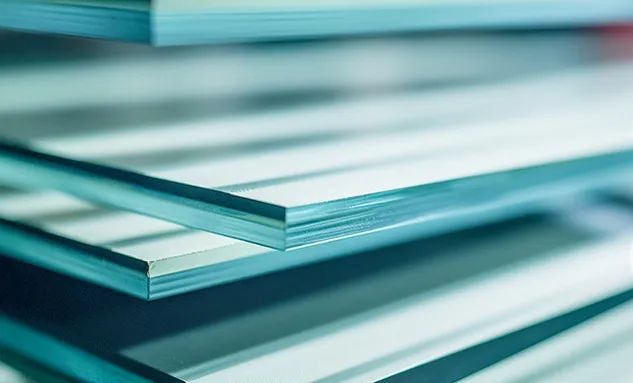
In order to meet these needs, different types of sensors are widely used in glass detection, including laser sensors, ultrasonic sensors, photoelectric sensors, pressure sensors, and spectral confocal laser displacement sensors that have emerged in recent years. These sensors have their own characteristics and are suitable for different detection scenarios and needs.
In this issue, we will share the application of transparent body detection sensors in identifying glass blocks of different thicknesses~
Testing requirements
The same workstation detects two glass blocks with different thicknesses to achieve anti-fooling function; for example: there are two types of glass with thicknesses of 2mm and 3.2mm respectively. The sensor is required to give a signal when detecting thick glass and not give a signal when detecting thin glass.
Selection analysis:
1. The detection material is made of glass; as a transparent or translucent material, its thickness changes have a greater impact on optical performance, but the visual difference between glasses of different thicknesses may not be obvious, which increases the difficulty of accurate distinction.
2. It is difficult for ordinary sensors to distinguish the 1.2mm difference and prevent materials from being fooled.
3. Ordinary specular reflection and limited reflection sensor detection cannot achieve stable model output, and the probability of false detection is high.
solution
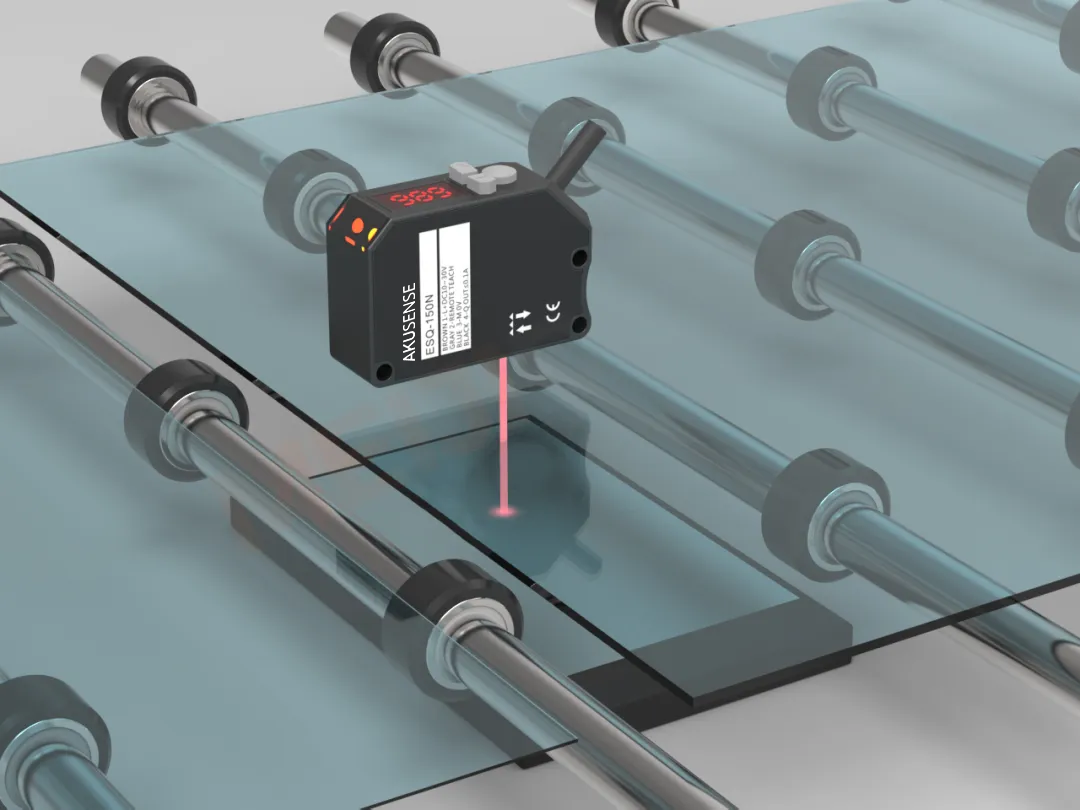
Laser sensor ESQ-150
1. When the light spot of the sensor hits the detection object, a numerical value is displayed. At the same detection distance, the detection signal thresholds of materials with different thicknesses can be set to achieve differential detection.
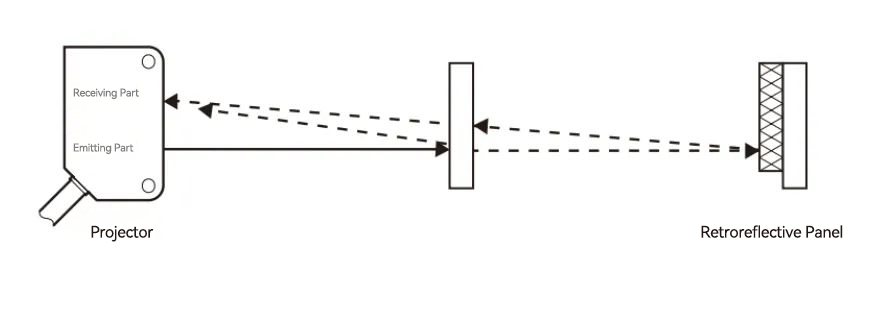
2. The working principle of retroreflection has outstanding advantages for transparent object detection.
3. LED coaxial light source, easy to calibrate
4. Button adjustment method, multi-level sensitivity is adjustable, and response time can be adjusted
5. The detection distance is 1.5m/4m optional. Choose 1.5m which is applicable in this scenario.